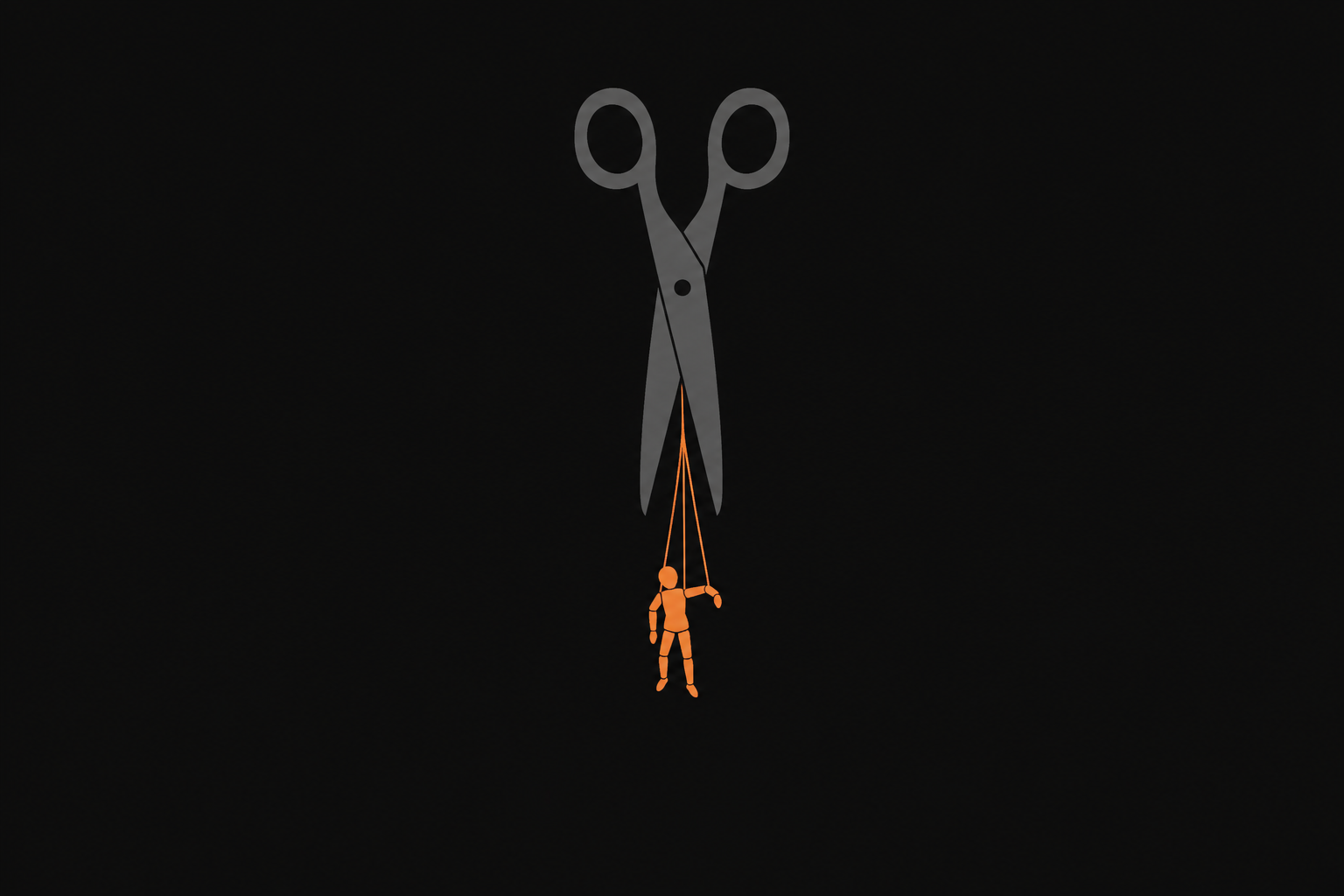
In December 2023, IBM announced it would pause hiring for roles that artificial intelligence could perform, affecting roughly 26,000 positions. CEO Arvind Krishna didn't mince words: back-office functions in human resources, accounting, and other non-customer-facing roles would be "replaced by AI and automation over the coming years." The announcement sent IBM's stock up 2% that day. The 26,000 workers who suddenly found their career trajectories uncertain were less celebratory.
This is the reality behind the Silicon Valley fairy tale that AI creates more jobs than it destroys. While technologists and economists debate long-term employment effects, millions of workers face immediate displacement with few viable paths forward. The skills gap isn't closing—it's widening into a chasm that separates those who can adapt to an AI-augmented economy from those who cannot.
The Vanishing Middle
AI-driven automation strikes hardest at the economic center. Unlike previous waves of technological change that primarily affected blue-collar manufacturing jobs, AI targets knowledge work that once provided stable middle-class incomes. The pattern is consistent across industries: roles requiring routine cognitive tasks disappear first, while jobs demanding either high-level strategic thinking or hands-on human interaction remain.
Goldman Sachs estimates that AI could automate 46% of tasks in administrative and support roles, 44% in legal services, and 37% in business and financial operations. These aren't minimum-wage positions. Administrative coordinators earn median salaries of $41,000. Paralegals make $56,000. Financial analysts command $83,000. When these jobs vanish, they don't get replaced by equivalent opportunities.
The displacement is already visible. Klarna, the Swedish fintech company, replaced 700 customer service agents with an AI assistant in 2024, handling the equivalent work of what previously required human staff. The company celebrated $40 million in annual savings. The 700 former employees faced a job market where customer service roles increasingly require either technical skills they don't possess or pay significantly less than their previous positions.
The cruel mathematics of AI displacement: every efficiency gain for shareholders becomes a skills gap for workers who must somehow transform themselves to remain economically relevant.
This creates what economists call "job polarization"—growth at the high and low ends of the skill spectrum, with middle-skill jobs hollowed out. The result is an hourglass economy where displaced middle-income workers face a stark choice: acquire advanced technical skills to compete for high-paying roles, or accept lower-paying service jobs that AI cannot yet perform.
The Adaptation Myth
The standard response to technological displacement has always been retraining. Workers adapt. They learn new skills. The economy evolves. This narrative assumes that displaced workers possess both the resources and capacity to reinvent themselves professionally—an assumption that reality rarely supports.
Consider the timeline mismatch. AI deployment happens in months. Professional retraining takes years. When JPMorgan Chase implemented AI for document review in 2017, the system accomplished in seconds what previously required 360,000 hours of lawyer time annually. The legal staff affected couldn't simply enroll in a coding bootcamp and emerge as data scientists six months later.
The skills gap widens because AI advances faster than human adaptation. A 2023 study by MIT's Computer Science and Artificial Intelligence Laboratory found that while 40% of displaced workers eventually found new employment, their median wage fell by 12% and remained depressed for at least five years. The successful adapters were overwhelmingly younger, more educated, and financially stable enough to invest in retraining without immediate income.
Age compounds the challenge. Workers over 45 face particular difficulty transitioning to AI-adjacent roles. They're competing against younger candidates who grew up with digital technology and recent graduates trained in machine learning and data analysis. The Bureau of Labor Statistics shows that displaced workers over 45 experience unemployment durations 50% longer than their younger counterparts.
Geography matters too. AI job creation concentrates in major metropolitan areas—San Francisco, Seattle, New York, Boston. But AI job displacement spreads everywhere. A customer service representative in Cleveland or an accounting clerk in Phoenix cannot easily relocate to compete for AI engineering roles in Silicon Valley. The result is regional economic divergence, where tech hubs prosper while other areas struggle with persistent unemployment.
Corporate Myopia
Companies implementing AI automation consistently prioritize immediate cost reduction over long-term workforce investment. The quarterly earnings cycle rewards executives who can demonstrate measurable savings from AI deployment, not those who spend money retraining displaced employees.
Amazon provides a telling example. The company announced a $700 million commitment to retrain 100,000 employees by 2025, generating positive headlines about corporate responsibility. But Amazon simultaneously accelerated warehouse automation that eliminated thousands of picking and packing jobs. The retraining program focused primarily on existing employees moving into technical roles, not the displaced workers who needed help most.
The pattern repeats across industries. When Walmart deployed AI-powered inventory management systems that reduced demand for stock clerks, the company offered online training modules in "digital skills." But these programs assumed workers had reliable internet access, flexible schedules, and the educational foundation to master complex technical concepts—assumptions that proved false for many affected employees.
Even well-intentioned corporate retraining efforts suffer from fundamental design flaws. They're built for the workers companies want to retain, not the workers they're displacing. High-performing employees with college degrees can successfully transition from financial analysis to data science. But the median displaced worker—someone with a high school education and fifteen years of experience in routine cognitive tasks—faces a much steeper climb.
The economics work against comprehensive retraining. Companies can hire experienced AI specialists for $150,000 annually or spend $200,000 over two years retraining a displaced worker who might not succeed in a technical role. The rational choice is obvious, even if the social cost is enormous.
Beyond the Headlines
The mythology of AI job creation persists because it serves powerful interests. Technology companies need public acceptance for AI deployment. Politicians need optimistic narratives about economic transformation. Business leaders need justification for workforce reductions that boost short-term profits.
But the lived experience of displaced workers tells a different story. They face not temporary disruption but permanent economic displacement. The new jobs that AI creates—machine learning engineers, AI ethicists, human-AI interaction designers—require skills and credentials that most displaced workers cannot reasonably acquire.
The unemployment gap isn't a transitional problem that resolves itself through market forces. It's a structural feature of an economy where technological advancement outpaces human adaptation. Until we acknowledge this reality, our responses will remain inadequate to the challenge we've created.
The question isn't whether AI will eventually create more jobs than it destroys. The question is what happens to the millions of workers displaced in the meantime, and whether we're prepared to manage an economy where human labor becomes increasingly optional rather than essential.