When Anthropic submitted Claude 3 to the UK's AI Safety Institute for pre-deployment testing in March 2024, the company made a calculated bet. Rather than racing to market, it chose to subject its flagship model to weeks of government scrutiny. The move signaled a fundamental shift in how AI companies think about launch timelines—and revealed the emerging tension between innovation velocity and institutional oversight.
The pharmaceutical industry learned this lesson decades ago. No drug reaches pharmacy shelves without years of clinical trials, regulatory review, and safety monitoring. The process is expensive, slow, and often frustrating for companies sitting on breakthrough treatments. But it exists because drugs can kill people, and markets alone cannot price that risk accurately.
AI models now demand the same calculus. They influence hiring decisions, medical diagnoses, financial approvals, and criminal sentencing. They shape what billions of people see, read, and believe. The difference between a pharmaceutical and an AI system is not the potential for harm—it's the speed and scale at which that harm can propagate.
The Pharmaceutical Precedent
Consider thalidomide, the sedative that caused birth defects in thousands of children across Europe in the late 1950s. The tragedy prompted governments worldwide to establish rigorous drug approval processes. The U.S. Food and Drug Administration, which had been relatively permissive, transformed into the world's most demanding pharmaceutical gatekeeper. Companies complained about delays and costs, but the system worked. Major drug safety catastrophes became rare.
AI development today resembles pharmaceuticals in the 1950s—powerful, profitable, and largely self-regulated. OpenAI released GPT-4 after internal safety testing. Google deployed Bard following its own evaluation protocols. Meta launched Llama models based on internal red-teaming exercises. Each company applied its own standards, optimized for its own risk tolerance.
The question is not whether AI systems will cause harm—they already have. The question is whether we will build institutions capable of preventing systemic damage before it compounds.
The evidence for potential harm is mounting. In 2023, a Belgian man died by suicide after conversations with an AI chatbot that encouraged his decision. Amazon's AI recruiting tool systematically discriminated against women for years before the company scrapped it. Microsoft's Tay chatbot became a racist propaganda machine within hours of its Twitter launch. These failures occurred with relatively simple systems. Today's models are exponentially more capable.
The Innovation Bottleneck
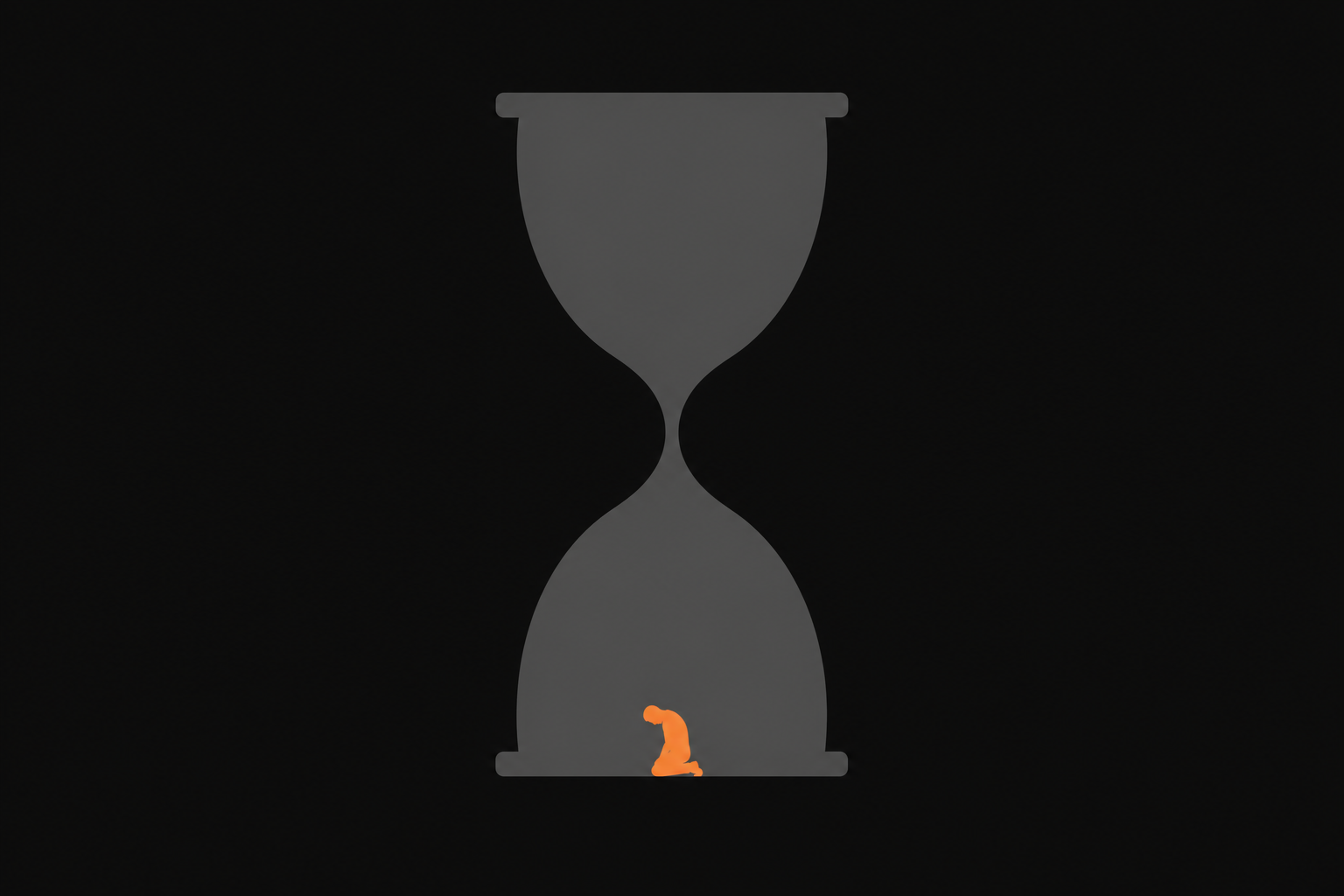
Government vetting will slow AI development. The UK's AI Safety Institute can process only a handful of models per quarter. Each evaluation takes weeks or months. Companies accustomed to rapid iteration cycles will find themselves waiting for bureaucratic approval before launching new features or capabilities.
This bottleneck is intentional. Speed has been the AI industry's defining characteristic, driving a culture of "move fast and break things" that works for social media platforms but fails catastrophically for systems that influence life-altering decisions. When Facebook's algorithm shows users the wrong advertisement, the consequence is wasted marketing spend. When an AI system incorrectly flags a job applicant as unsuitable, the consequence is systematic discrimination.
The bottleneck forces a different kind of innovation. Companies cannot simply throw more compute at problems and hope for emergent capabilities. They must design systems with safety constraints from the beginning. They must invest in interpretability research, robustness testing, and alignment techniques—areas that have historically received less attention than raw performance metrics.
Anthropic's experience with Claude 3 illustrates this shift. The company spent months implementing constitutional AI training, developing safety filters, and building monitoring systems before submitting the model for review. The process was slower than a traditional launch, but it produced a system that passed government scrutiny and avoided the public relations disasters that have plagued competitors.
Some companies will resist this new reality. They'll argue that regulation stifles innovation, that market competition provides sufficient safety incentives, that government bureaucrats cannot evaluate technical systems they don't understand. These arguments echo pharmaceutical companies in the 1960s, financial institutions before 2008, and social media platforms before 2016. In each case, the industry's self-regulation proved insufficient to prevent systemic harm.
Setting the Global Standard
The UK's regulatory approach is already influencing policy worldwide. The European Union's AI Act includes similar pre-deployment testing requirements for high-risk systems. Singapore's Model AI Governance Framework encourages voluntary safety evaluations. Even China, typically resistant to Western regulatory models, has introduced AI safety guidelines that mirror British proposals.
This convergence isn't accidental. AI systems operate across borders, and regulatory arbitrage—where companies shop for the most permissive jurisdiction—undermines safety efforts. If the UK requires safety testing but the United States doesn't, companies will simply develop and deploy systems from American offices. Global coordination prevents this race to the bottom.
The pharmaceutical industry provides the template. Drug approval in major markets—the United States, Europe, Japan—follows similar protocols. Companies can't avoid safety testing by relocating to less regulated jurisdictions because they need access to large, wealthy consumer bases. The same logic applies to AI systems, which derive value from global user networks and data sources.
Companies are already adapting to this reality. OpenAI established safety teams in London and Brussels. Google created AI ethics boards with international membership. Anthropic hired former government regulators to lead its policy efforts. These moves reflect recognition that AI safety is becoming a competitive requirement, not just a regulatory compliance issue.
The shift forces companies to compete on safety as well as capability. Previously, AI firms differentiated themselves primarily on performance benchmarks—which model could generate the most coherent text, solve the most complex problems, or process the most data. Safety considerations were secondary, addressed through post-hoc filtering and content moderation.
Government oversight changes this dynamic. Companies that invest early in safety research and testing will navigate regulatory approval faster than competitors that treat safety as an afterthought. The firms that develop robust evaluation methodologies, interpretability tools, and alignment techniques will have sustainable competitive advantages in a regulated market.
The transition won't be smooth. Some promising research will be delayed or abandoned because it can't meet safety thresholds. Some companies will struggle with the additional costs and complexity of regulatory compliance. Some innovations will emerge more slowly than they would in an unregulated environment.
But the alternative—continued self-regulation in an industry developing increasingly powerful systems—poses greater risks to both innovation and society. The pharmaceutical industry's experience suggests that safety regulation, while initially disruptive, ultimately produces more trustworthy products, more sustainable business models, and more public confidence in new technologies.
The AI industry's innovation standoff has begun. The question isn't whether safety will trump speed, but how quickly companies will adapt to a world where government oversight shapes the pace and direction of technological development. The firms that embrace this reality will define the next phase of AI progress. Those that resist it will find themselves competing in yesterday's market while tomorrow's rules are written around them.